
The Cane Corso Standard of Excellence
Defining the physical prowess and noble temperament of the Italian Mastiff.
Physical Proportions:
The "Protector" vs. "Producer"
Height & Frame
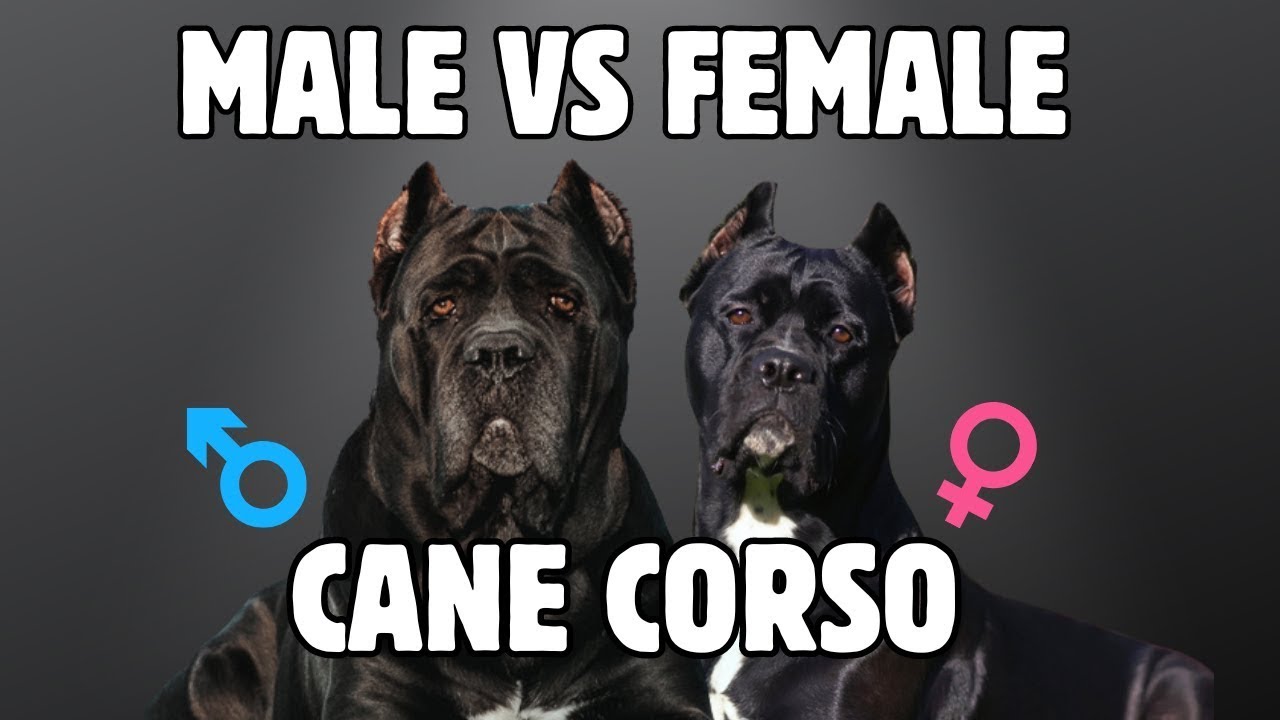
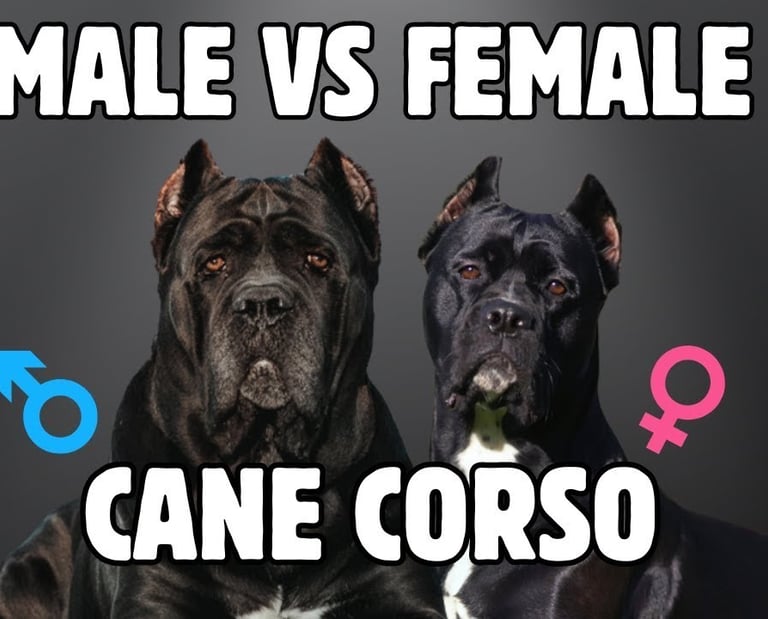
Males (The Frontline): Being taller (25–27.5") and heavier (up to 120 lbs) gives the male the physical presence needed for high-stakes guarding. Their larger bone structure and deeper chests were historically necessary for "gripping" large game or deterring intruders through sheer size.
Females (The Versatile Athlete): Being slightly smaller (23.5–26") and leaner makes them more agile. In a traditional Italian masseria (farm), the female was often the swifter hunter and more nimble "alarm" dog.
Temperament:
The "Alpha" vs. "Nurturer"
Guardian Mindset
Male Temperament: Generally more dominant and "steady." A male Corso tends to be a constant, looming presence. They are often more territorial and take their role as the "perimeter guardian" very seriously.
Female Temperament: Often described as more "discerning" or "moody" in a smart way. Females are typically faster to mature mentally than males. While just as protective, their instinct is often more "niche"—focusing intensely on the immediate family unit (the "pack") rather than just the property.


Detailed Features:
Masculine vs. Feminine Expression
The Look
Masculine Features: Males should have a significantly larger, more "blocky" head with a more pronounced muscular neck. In the show ring and in breeding, a male that looks "feminine" is considered a fault.
Feminine Features: Females should still be imposing but carry more "elegance." Their lines are typically cleaner, and their heads, while large, are more proportionate to a slightly refined frame.


The Show Ring:
Judging the Italian Guardian.
Conformation & Movement
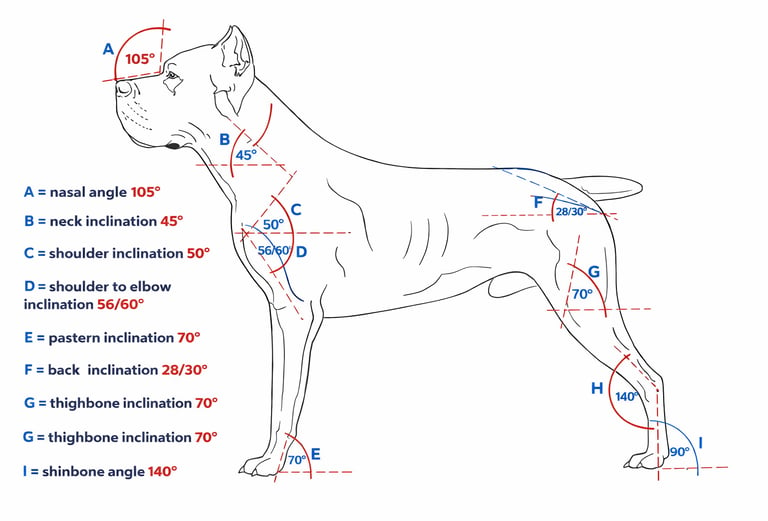
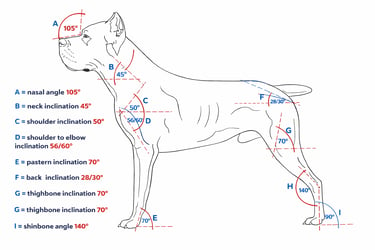
The Ideal Silhouette: In the show ring, a Corso must be "square"—the height at the withers should be nearly equal to the body length.
The Gait: Movement should be powerful, effortless, and fluid. Judges look for a "strong reach and drive," meaning the dog covers maximum ground with minimum effort. Clumsiness or a "heavy" step is a significant fault.
Topline: The back must remain level and firm, even while the dog is in motion.
The Head & Expression (The Breed "Type")
The head is the most scrutinized part of the Corso in the ring.
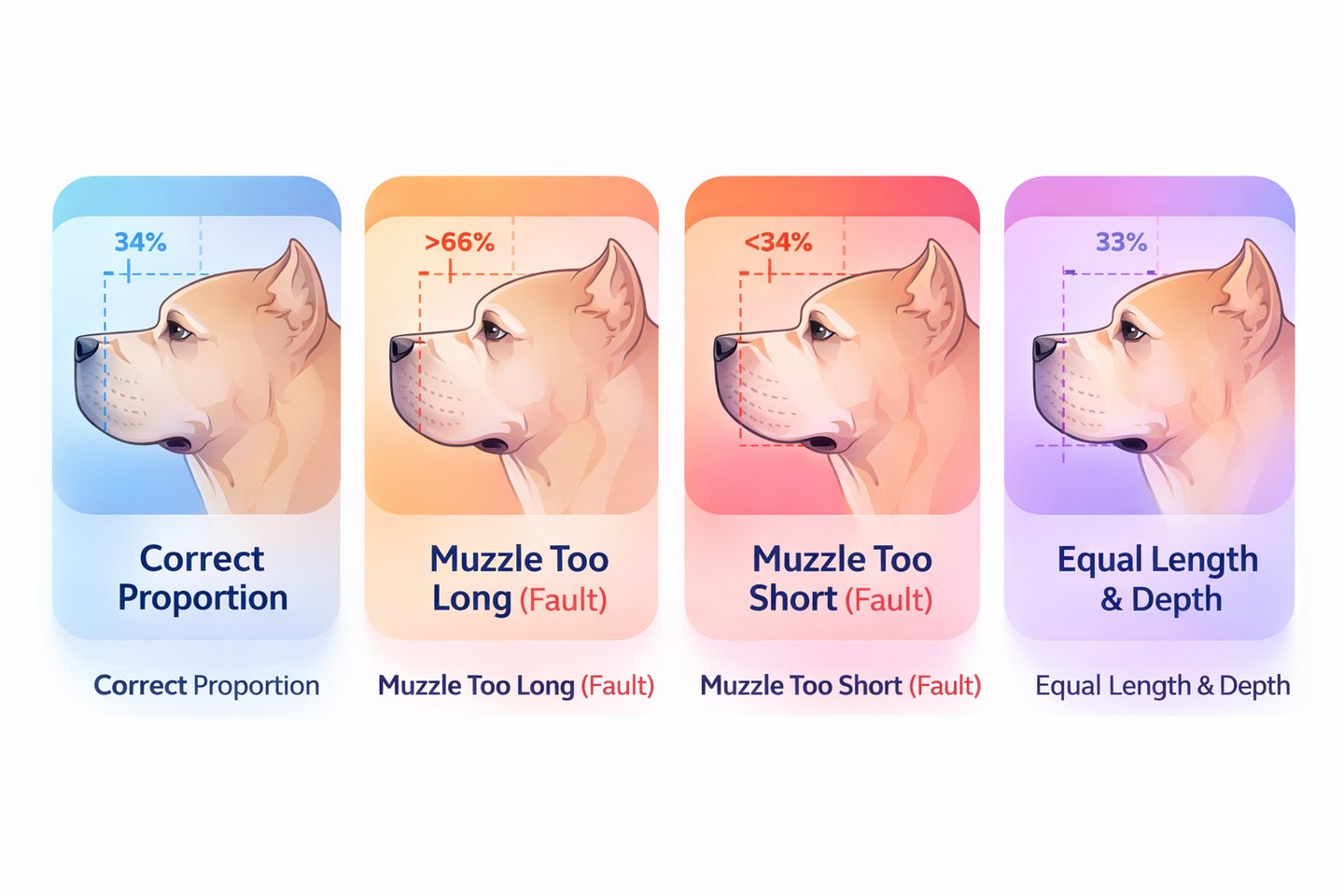
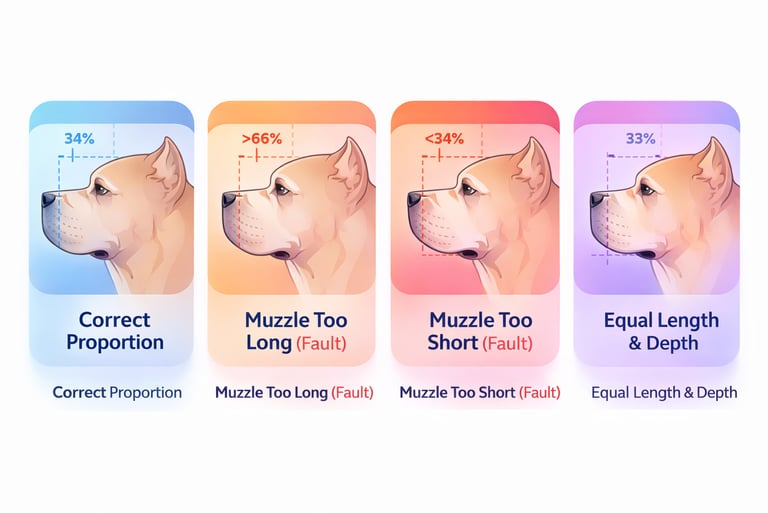
Muzzle-to-Skull Ratio: The muzzle should be approximately 33% (one-third) of the total length of the head.
The Bite: A slightly undershot bite (up to 1/4 inch) is the preferred standard. An overshot bite (top teeth over bottom) is a disqualifying fault.
Eyes: Must be almond-shaped and set sub-frontally. Dark eyes are preferred; "Bird of Prey" (yellow) eyes are heavily penalized as they ruin the breed's signature noble expression.
Official Coloration & The Mask
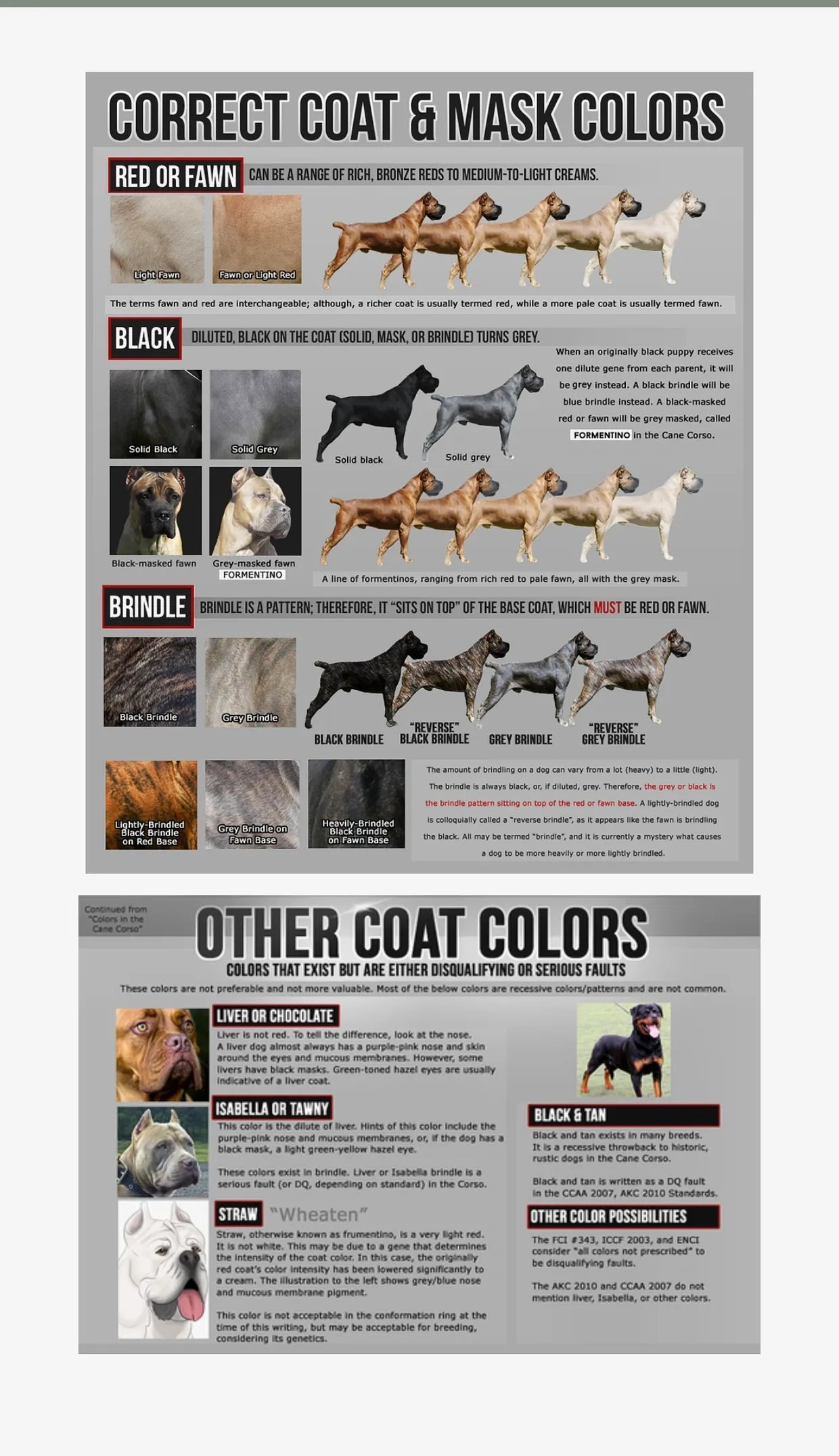
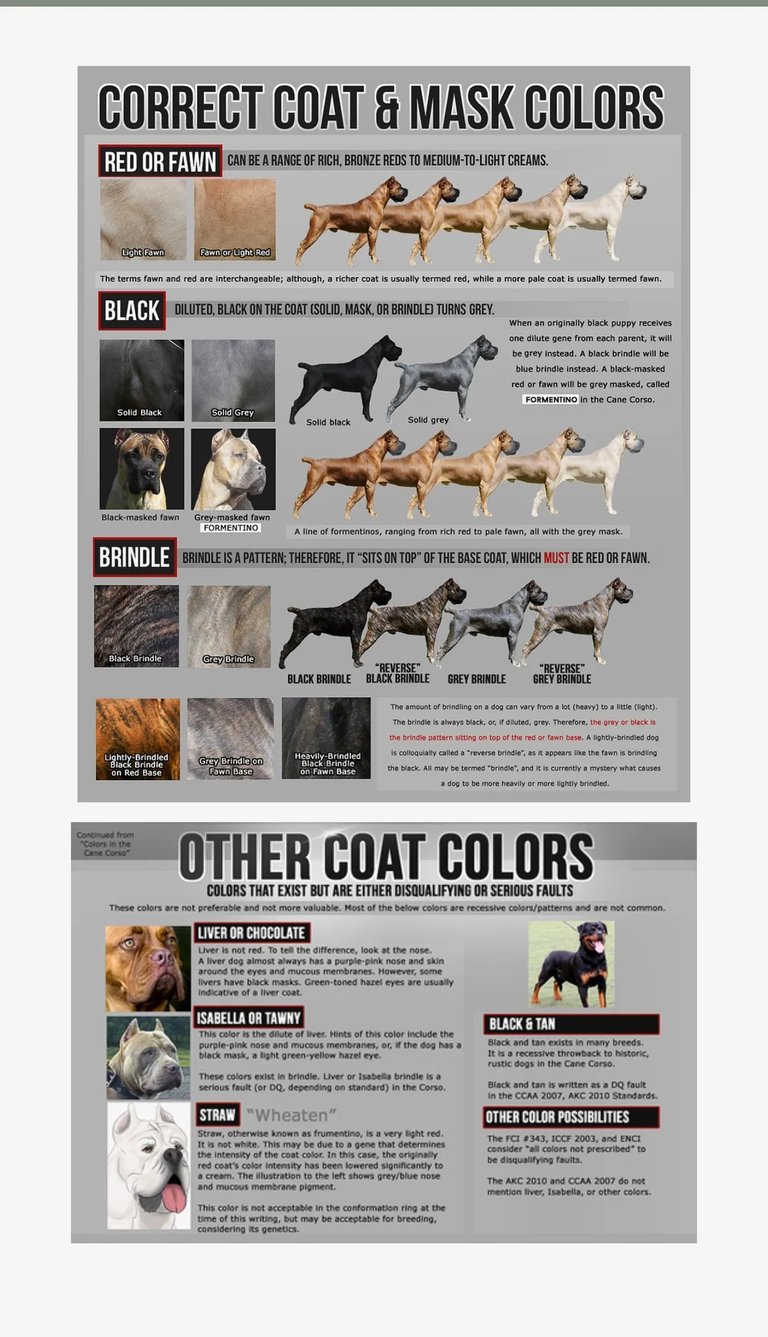
Color is more than just a coat shade; it’s about the specific markings required for "Breed Type."
The Mask: For Fawn (Fulvous) and Gray dogs, a Black or Gray Mask is mandatory. Crucially, the mask must not extend past the eyes. A "hooded" mask that covers the whole head is a fault.
Disqualifying Colors: Any color not traditionally recognized—such as "Tan Points" (like a Doberman/Rottweiler), "Blue" (diluted black without a mask), or white patches that extend beyond the chest or toes—will lead to disqualification from the ring.
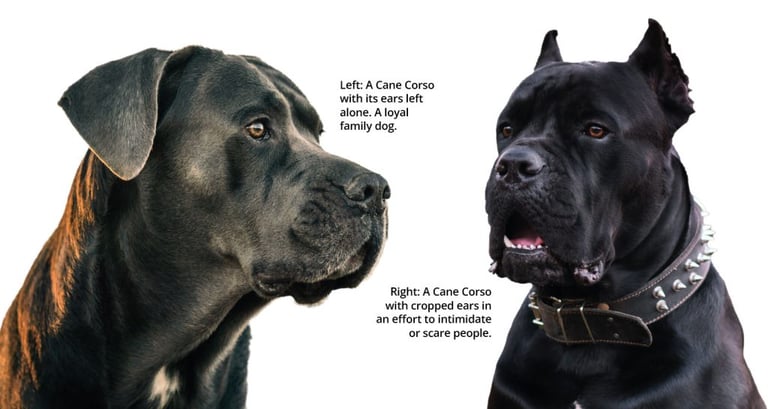
Cropped vs. Natural (The Modern Standard)
The show ring currently recognizes two distinct aesthetics:
Traditional (Cropped/Docked): Ears are cropped into an equilateral triangle to accentuate the square head. The tail is docked at the 4th vertebra.
Modern (Natural): Natural "drop" ears and a full tail are becoming more common.
The Verdict: In the AKC (USA), both are acceptable and should be judged equally. In the FCI (International), many countries now strictly require a natural dog. A judge's focus remains on the structure of the ear/tail, not just the presence of a crop.
Show Temperament
A Corso must show "Stability Under Pressure." They must allow a stranger (the judge) to examine their teeth and body without shying away or showing aggression. A dog that cannot maintain its composure in the ring is immediately dismissed.


Subscribe to our newsletter
Cane Corso Club
Your trusted national resource directory for Cane Corso owners and enthusiasts. Connecting you with expert breeders, trainers, healthcare providers, and community resources.